Independence Day
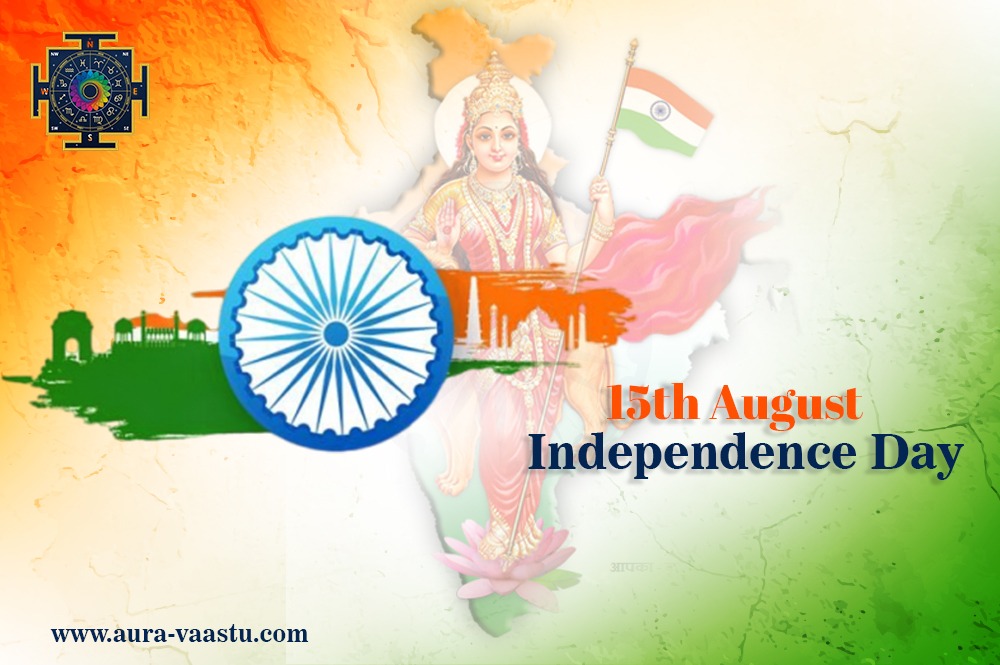
On the day of 15th August, our heart is overwhelmed with patriotic pride and feelings of national unity. As we pay homage to our brave freedom fighters and celebrate the Independence Day, we also reflect on the amazing journey of India from being a British colony to slowly rising into a global power. It is highly interesting to note that Astrological science has played a pivotal role in the progression and welfare of our nation. Let’s discover this wonderful fact.
Choosing the Best Date and Time for Independence
According to an article, ‘Who Does Not Consult Stars’ by Sir Woodrow Wyatt that was published in Times (London) in May 1988, the time chosen by India for Independence was based on certain astrological calculations. In reality, when the talks on Independence Day for India began, it was officially decided that India would be given a choice of two dates- 14th and 15th August. As soon as this declaration was out, Shree Rajendra Prasad sent a message to his friend, the diviner and master astrologer, Pandit Surya Narayan Vyas through Goswami Ganesh Dutt Maharaj. He requested him to come to Delhi and meet him for an urgent consultation. On receiving the message, Pandit Surya Narayan Vyas came to meet Shree Rajendra Prasad. Shree Rajendra Prasad asked him to make an astrological analysis and decide on the auspicious date to be considered as the Independence Day for the country. The midnight muhurta of 14th August (that is 15th August) with ‘Sthir lagna’ (stable ascendant ‘lagna’) was found to be the ideal one for the Independence Day. The ‘Sthir lagna’ invited a stable democracy and freedom for the country in all ages. Pandit Vyas ji also predicted that there will be various challenges in terms of poverty, education and development of the nation due to various negative planetary influences but the nation will keep moving forward and from the Nineties onwards there will be a remarkable development. As per his astrological analysis, India was set to become a world power by 2000. And his predictions came true!
Let us decode the symbolism and significance of the chakra and different colours of our National Flag:
Chakra
The Chakra or the wheel of fortune, in the centre of the flag, is the representation of Dharma or righteousness. This chakra is a reminder of the moral values as instructed by Emperor Ashoka, popularly known as Devanampriyaha. Also, this Chakra makes us ponder on the spiritual knowledge imparted in Bhagavad Gita by Shree Krishna. The Dharma Chakra denotes that the supreme Brahman is reflected or takes its form in Vedic sacrifices. The Chakra represents that Time is always in motion. The Indian philosophy of ‘charaivati charaivati.’ which means to be in motion is beautifully encapsulated through the wheel of fortune. The Chakra inspires us to keep moving on despite the hurdles, the agonies, the failures because it is only when we are in motion that we can reach our destination at the end.
Colours
The three colours in the Indian Flag: green, white and orange have a deeper connotation. These three hues denote that military strength to safeguard from enemies, wealth for prosperity and knowledge for the purpose of an ideal administration are essential elements for the welfare of a nation. The green colour in the flag is associated with Durga- the divine Shakti and mother goddess of protection, the orange colour is associated with Mahalakshmi- the goddess of opulence and the white colour is associated with Ma Saraswati- the divine Goddess of absolute wisdom. It is extremely interesting that the three colours of our national flag represent the three Shaktis or Goddess of power. The three Shaktis or Mother Goddesses together make Mother India or Bharat Mata – the embodiment of purity, power and wisdom.
If you want to know more about auspicious times and muhurta, contact us.
On this auspicious Independence Day, let us seek blessings for power, peace, unity and positive thought and action from the Divine Mother. Let us all work together in safeguarding the freedom that we have achieved and also help in making the nation progress in every way.